
Over 300,000 orders shipped since 2005
FREE Delivery on orders over £45
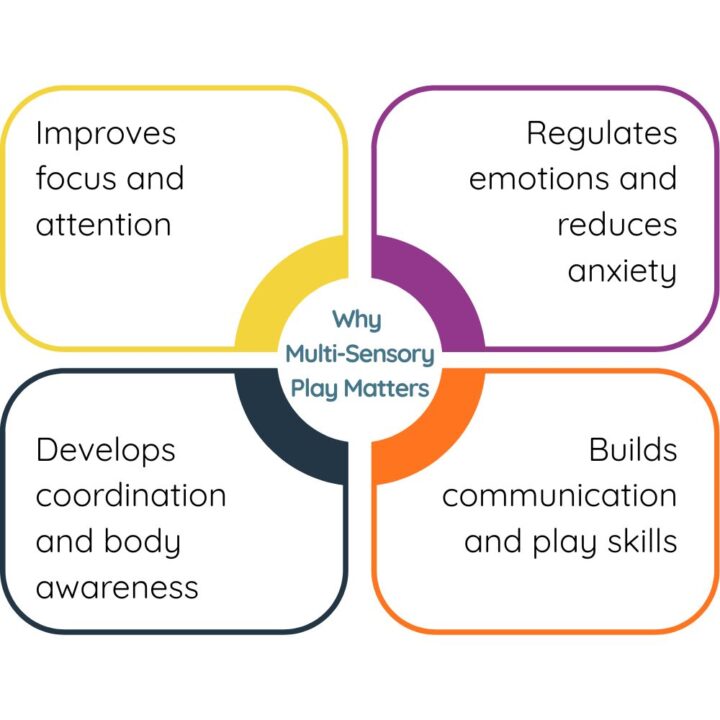
Multi-sensory play involves stimulating more than one sense at a time—such as touch, sight, sound or movement. These types of activities help children process sensory information, regulate emotions, improve focus and develop important skills in a fun and meaningful way.
The good news for parents is that you don’t need a fully equipped sensory room to make a difference. With a few well-chosen tools and resources from Sensory Direct and some simple ideas, you can create engaging multi-sensory experiences at home.
Many sensory tools work by providing either calming or stimulating input to the nervous system. When used in a balanced way, they can support children in feeling more settled, organised and ready to engage with the world around them.
Why Multi-sensory play matters :
Activities that involve:
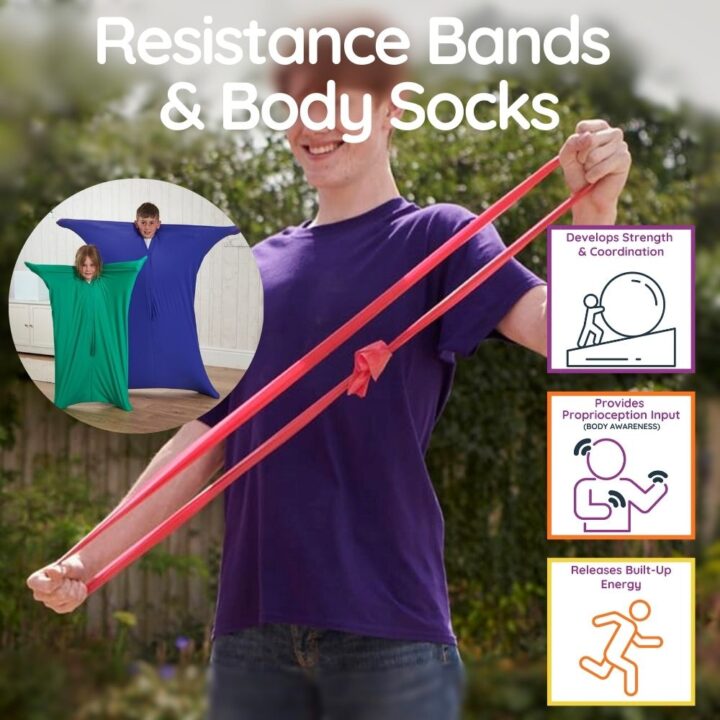
Resistance Bands and Body Socks are ideal for activities often referred to as “heavy work”, where muscles are actively working against resistance.
These activities are particularly beneficial for children who seek proprioceptive input (body awareness), as they require the use of both muscles and joints. The controlled movements involved help to improve strength, coordination and overall body awareness. These type of activities suit "Sensory Seekers" who find it difficult to keep still and are always on the go.
The gentle pressure created by resistance can also have a calming effect, helping children feel more organised and regulated while releasing built-up energy.
Activities that involve:
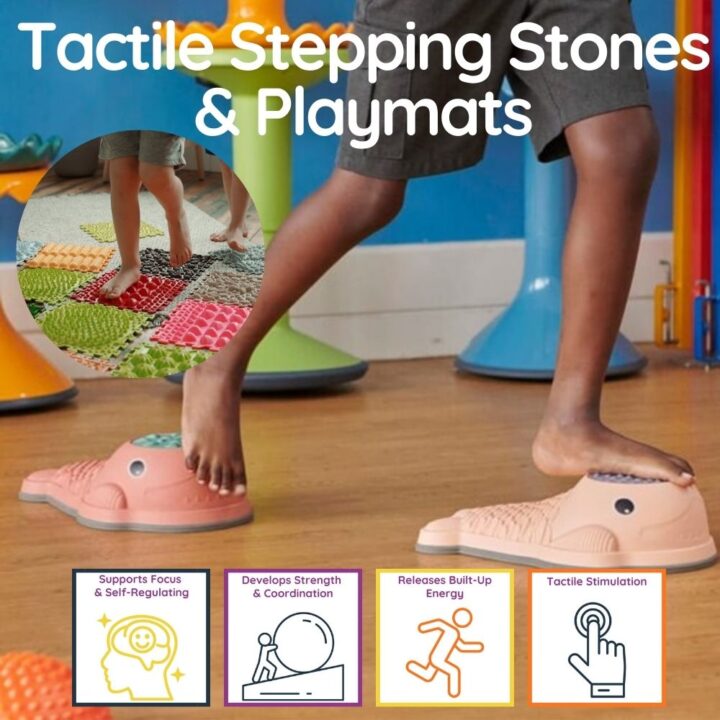
Playmats and Tactile Stepping Stones combine movement, touch and balance, helping children engage multiple senses at once in a fun and natural way.
These resources encourage children to jump, crawl, step and balance, activating both the body and the brain. This type of movement helps children feel more organised, focused and ready to engage in other activities such as learning or relaxing.
Exploring different textures, patterns and interactive surfaces also supports sensory development by encouraging curiosity and exploration. Children can gradually build confidence as they become more comfortable with a variety of sensations.
For those who are sensitive to touch, this type of play offers a safe and controlled way to experience new textures at their own pace.
Activities that involve:
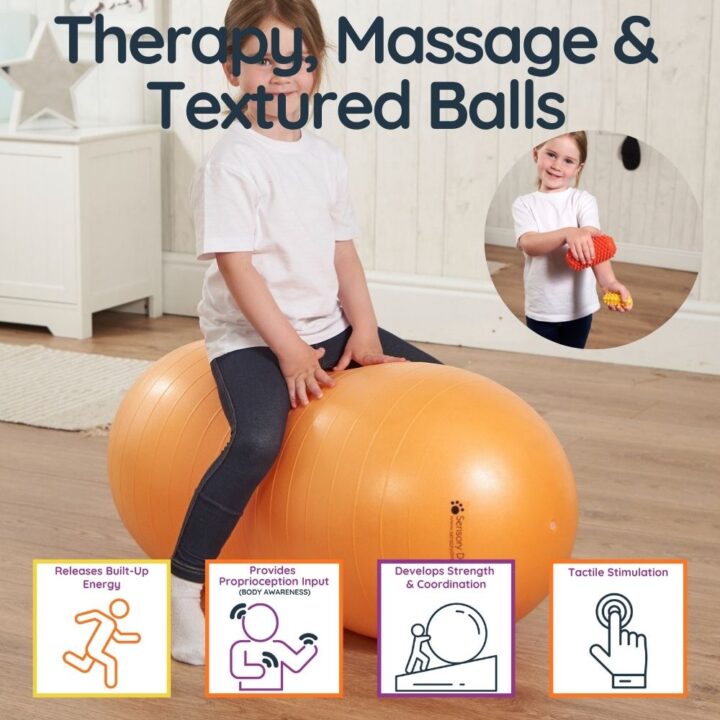
Therapy Balls offer a wide range of movement and balance activities that support both physical development and sensory needs.
When children sit or lie on Therapy Balls, their bodies naturally make small adjustments to stay balanced. This engages core muscles and provides valuable proprioceptive input, helping to improve strength, posture and confidence in movement.
Massage Balls and Textured Balls introduce an additional layer of tactile sensory input. With bumps, ridges or soft spikes, they can be used to:
These activities help children:
For children who actively seek tactile input, these tools can be especially satisfying. For those who are more sensitive, they provide a gentle and controlled way to explore new sensations.
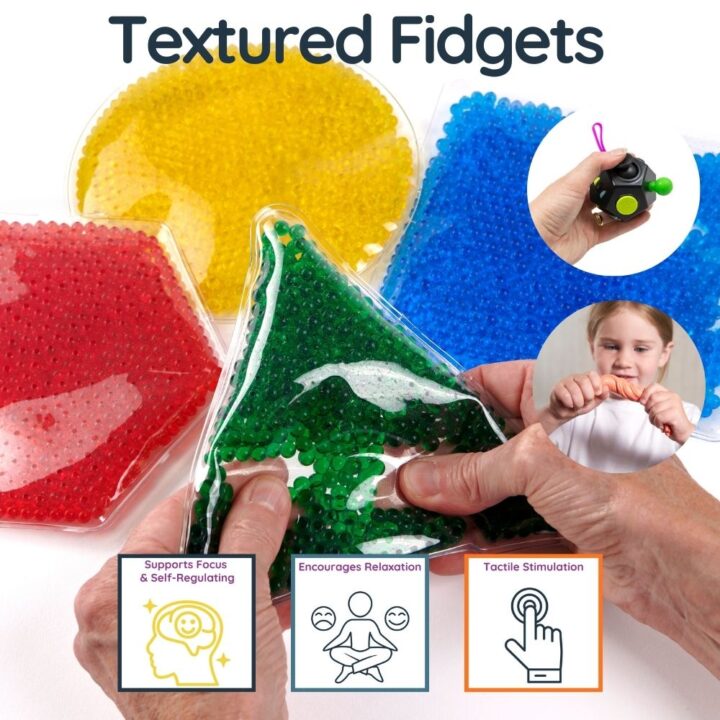
Activities that involve: