
Over 300,000 orders shipped since 2005
FREE Delivery on orders over £45

This is part three of the four part blog series, written by Andrea Matthews, OT and Mum from Creative OT. In part two, Andrea wrote listening, explaining and problem-solving with her son. She shares the importance of acknowledgment and how each person's sensory profile is unique to them.
In Part three, Andrea now looks at the 8 sensory systems, how we identify our sensory needs and how they can impact behaviour, movement skills and learning.
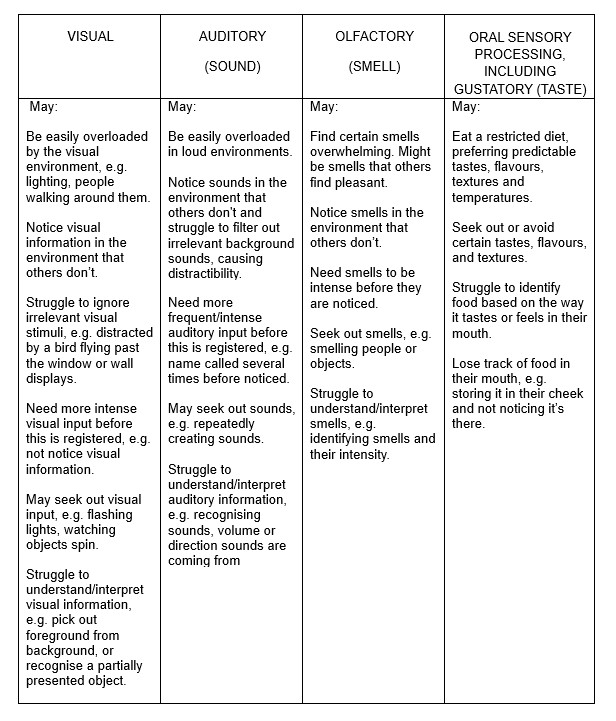
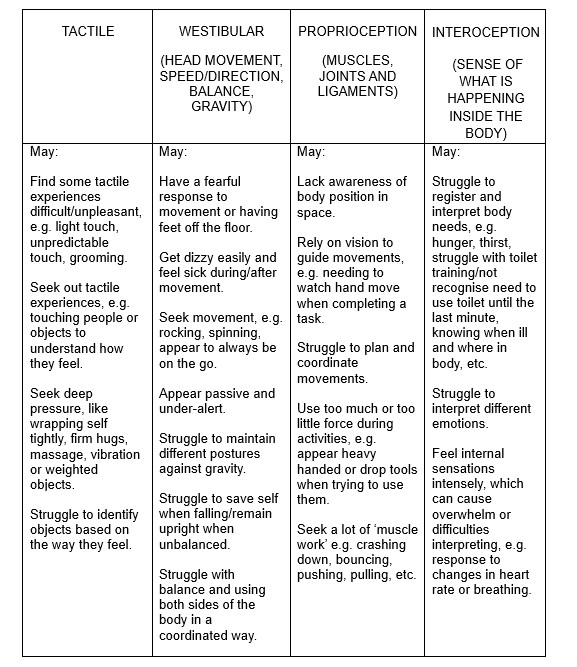
We have 8 sensory systems that inform us about the world around us and the internal state of our body. Sensory differences can result in over or under responding to sensory information in one or more sense (modulation) and/or having difficulties understanding and interpreting the qualities of sensory information (discrimination), e.g. does an object feel hard, soft, rough, etc.
Sensory processing differences can impact regulation, behaviour, movement skills and learning, and can therefore make it difficult to participate in the activities that we want and need to do.

Some examples of sensory based challenges are highlighted in the table below, but it is important to seek advice from a therapist trained in sensory integration if you are unsure about the sensory needs of your child. These needs are not always obvious and can appear inconsistent and unpredictable. For example, a child may struggle to cope in a noisy assembly but may thrive in a loud sports hall when playing their favourite sport.
On the surface it may look like they can’t have difficulties with loud or busy places. However, we need to look at sensory processing as a whole. In assembly they may be expected to sit still and not leave the hall and may have to sit in close proximity to others, so they can’t move or leave the environment to support regulation, and sitting close to others may cause anxiety, for example due to the risk of unexpected touch.
When playing sport they can move their body (vestibular and proprioception), leave if they need to, and are doing something they enjoy and makes them feel good. So, although the environment is noisy and busy, they may feel more able to manage this due to the other helpful/supporting factors.

The sensory systems should work together in a coordinated way and most things that we do involve a number of sensory inputs being integrated. For the purpose of providing examples, the table below shows some of the possible challenges that can arise from sensory processing difficulties in each sense, though it should be noted that often more than one sensory system is involved.
For example, dyspraxia (also known as Developmental Coordination Disorder or DCD) is associated with both proprioceptive and vestibular systems, but it's broader than just those two systems—it also involves issues with:
Motor planning: Difficulty planning and executing movements in sequence.
Fine motor skills: Challenges with tasks like writing or using utensils.
Gross motor skills: Struggles with tasks like throwing, catching, or riding a bike.
These examples are by no means exhaustive but aim to give an idea of the vast array of challenges that can arise from sensory processing difficulties.
Next time in part 4 ……practical strategies and tools to help manage your child’s sensory needs
Blog Series written and supplied by Andrea Matthews, Creative OT


Andrea is an Occupational Therapist and Advanced Sensory Integration Practitioner. She specialises in neurodivergence, sensory processing and acquired brain injury. Her time is spent working in schools, clients’ own homes, clinic, workplaces, and the community with adults and children. Andrea is Co-Director of Creative Occupational Therapy, Neuro Rehab Group and Creative Physiotherapy.
Web: creativeoccupationaltherapy.com
Facebook: Creative Occupational Therapy
Updated January 2025