
Over 300,000 orders shipped since 2005
FREE Delivery on orders over £45

In today's educational landscape, schools are increasingly recognising that it’s not all about textbooks and exams. For many students, particularly those with sensory processing difficulties, autism spectrum disorders, ADHD, or anxiety, the traditional classroom environment can sometimes feel overwhelming. This is where sensory rooms are making a profound difference, offering a dedicated space for students to reset, regulate, and return to learning with renewed focus.
What Are Sensory Rooms?
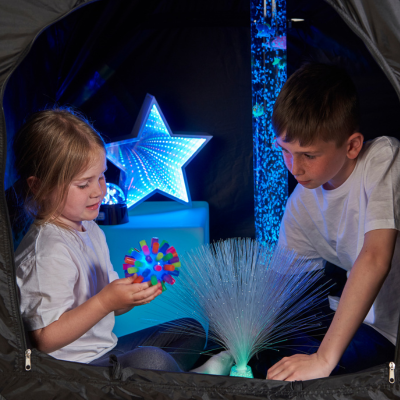
Sensory rooms are specially designed areas created to provide controlled sensory experiences. These spaces typically feature adjustable lighting, comfortable seating, textured materials, calming sounds, and various tactile elements. Unlike the traditional classroom, sensory rooms are designed to be flexible, allowing students to adapt their environment based on their individual sensory needs.
The equipment in these rooms might include bubble tubes & walls with changing colours, fibre optic light tails, weighted blankets, noise-cancelling headphones, tactile pads, balance pods & boards, and aromatherapy diffusers. The aim is to create a space where students can stimulate their senses when they need alerting input or calm themselves when feeling overwhelmed.

Supporting Students with Diverse Needs
One of the most significant benefits of sensory rooms is their ability to support students across a wide spectrum of needs. For autistic students, these spaces provide a crucial retreat from the sensory bombardment of busy hallways and chattering classrooms. The predictable, controlled environment helps reduce anxiety and prevents sensory overload that can lead to meltdowns or shutdowns.
Students with ADHD often struggle with attention and emotional regulation. Sensory rooms offer them opportunities to engage in proprioceptive activities like using weighted lap pads or fidget tools, which can help improve focus and self-control when they return to academic tasks. The movement-based equipment in these rooms allows students to get the physical input their bodies crave without disrupting the learning environment.
Neurotypical students can also benefit from sensory rooms. Children dealing with stress, grief, or challenging life circumstances can use these spaces to decompress and develop emotional regulation skills. The rooms serve as a proactive approach to mental health support, giving students tools to manage their emotional states before problems escalate.
Enhancing Academic Performance
The connection between sensory regulation and academic success is well established in educational research. When students are in an optimal state of arousal (neither over or under stimulated) they are better able to take on information, engage in class discussions and complete assignments. Sensory rooms help students achieve this ideal state.
Teachers report that students who use sensory rooms return to class more focused and ready to learn. The brief intervention of spending 10-15 minutes in a sensory space can be hugely beneficial for the individual student saving potentially hours of disrupted learning. Other students also benefit as a calmer classroom environment enhances learning for everyone.
Moreover, sensory rooms can improve attendance and reduce the need for disciplinary actions. Students who previously might have been suspended for behavioural issues stemming from sensory difficulties now have an alternative. This keeps them in school and engaged in their education rather than missing valuable learning time.
Building Essential Life Skills
Beyond immediate academic benefits, sensory rooms serve as training grounds for crucial life skills. Students learn to recognise their own sensory needs and develop self-awareness and the ability to communicate what helps them feel regulated.
Sensory rooms also provide opportunities for students to practice coping strategies and emotional regulation techniques. Under the guidance of occupational therapists or trained staff, students can explore different sensory tools and learn which ones work best for them in various situations. These skills become part of their personal toolkit for managing stress and maintaining emotional balance throughout their lives.

Creating Inclusive School Communities
Sensory rooms represent a broader commitment to inclusive education. They send a powerful message that schools value and support all learners, regardless of their sensory processing needs. This inclusive approach benefits the entire school community by fostering empathy, understanding, and acceptance of differences.
When schools invest in sensory rooms, they're also investing in staff development. Teachers and support staff learn more about sensory processing and how it impacts learning, leading to more informed instructional practices and classroom accommodations. This knowledge ripples throughout the school, creating a more sensory-aware educational environment.
Looking Forward: The Future of Sensory-Aware Education
As our understanding of sensory processing and its impact on learning continues to grow, sensory rooms are likely to become even more sophisticated and personalised.
As schools increasingly embrace neurodiversity, they are transforming sensory rooms from spaces designed for a few students into learning environments that benefit many. Some schools are beginning to incorporate sensory elements into regular classrooms and common areas, creating more universally accessible learning environments.
Conclusion
Sensory rooms represent a significant step forward in creating educational environments that truly serve all students. By acknowledging that learning involves the whole person – including their sensory processing system – schools can provide more effective support for academic, social, and emotional development.
The benefits of sensory rooms extend far beyond the walls of the space itself. They create ripple effects that improve classroom environments, enhance teacher understanding of diverse learners, and build more inclusive school communities. Most importantly, they give students the tools and skills they need to regulate themselves, advocate for their needs, and succeed not just in school, but in life.
As more schools recognise the value of sensory rooms, we're moving toward an educational future where every student's sensory needs are understood, respected, and supported. In this future, the question won't be whether schools can afford to have sensory rooms, but whether they can afford not to have them.