
Over 300,000 orders shipped since 2005
FREE Delivery on orders over £45
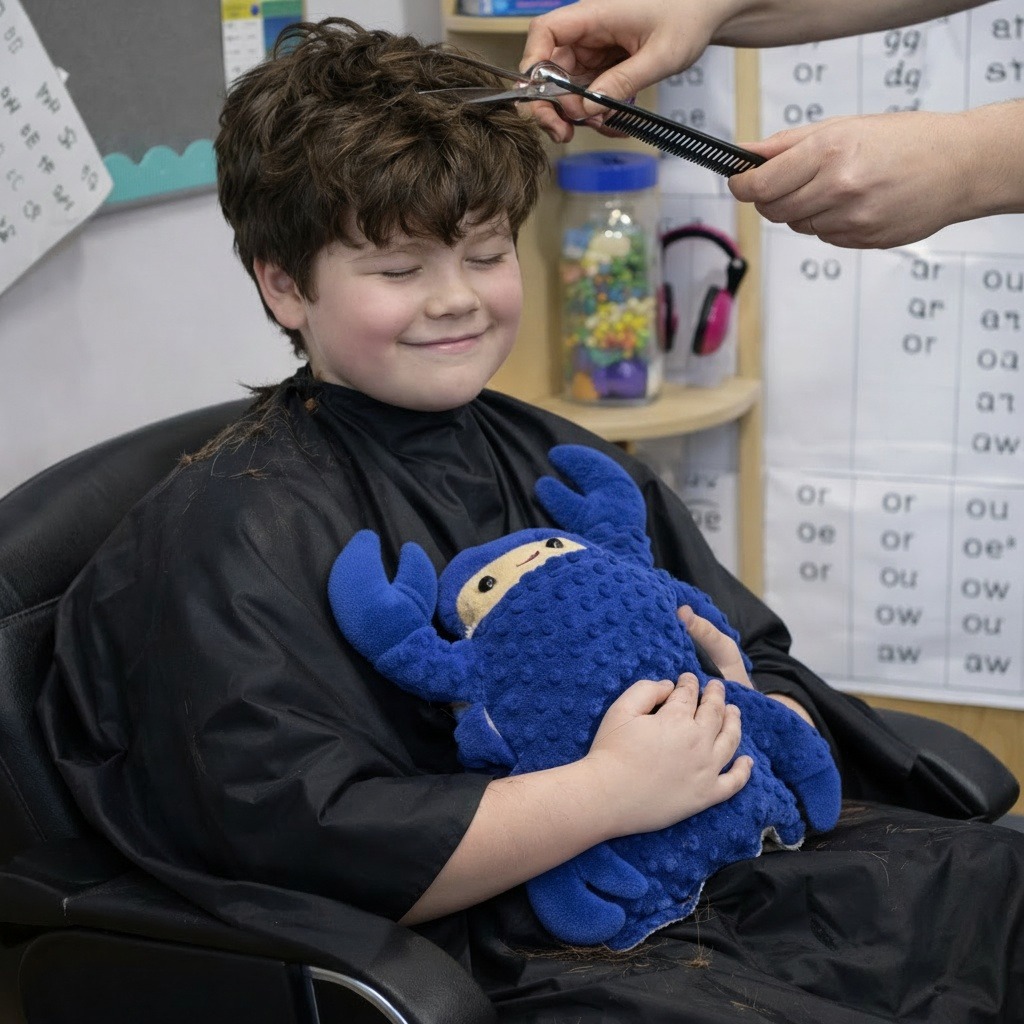
Getting an autistic child through a haircut can feel overwhelming — for your child and for you as a parent or carer. I wrote a blog about my own experiences with this a while ago, and it prompted a huge response from readers who shared similar stories. When I recently checked, I was shocked to see I wrote that original post back in 2014 (doesn’t time fly!). So I thought it was definitely time to revisit the subject.
My own son Ethan has ASD and significant sensory sensitivities. When he was little, haircuts were one of the biggest challenges we faced. I can still vividly remember how the act of cutting his hair seemed to cause him physical pain — he would cry out as the scissors cut through his hair.
I tried everything: clippers, scissors, home haircuts, barbershops — and along the way I learned some useful strategies to help him through it. Now he’s 25 years old and able to self-regulate to the point where he enjoys a trip to the barbers to smarten up. So if you’re in the thick of it right now, hold on — it really can get better.
Here are 9 practical, parent-tested strategies to help your autistic child manage a haircut with less stress.
Forward planning is essential. Preparing your child helps reduce anxiety.
Talk about the haircut ahead of time. How far in advance depends entirely on your child. Too much notice can increase anxiety; too little may not give them time to prepare mentally. Trust your knowledge of your child when deciding the timing.
You could:
Use a simple visual schedule (e.g. “We drive → We wait → Haircut → Sticker → Home”).
Watch short videos of haircuts.
Create a simple social story explaining what will happen step by step.
Practice at home with pretend scissors or clippers — even just turning clippers on so they get used to the sound.
Hairdressers and barbers can be noisy, busy, and overwhelming environments. However, some salons are becoming more sensory-aware — it’s worth asking around locally.Look for:
Alternatives include:
The aim is a manageable experience — not a perfect haircut.
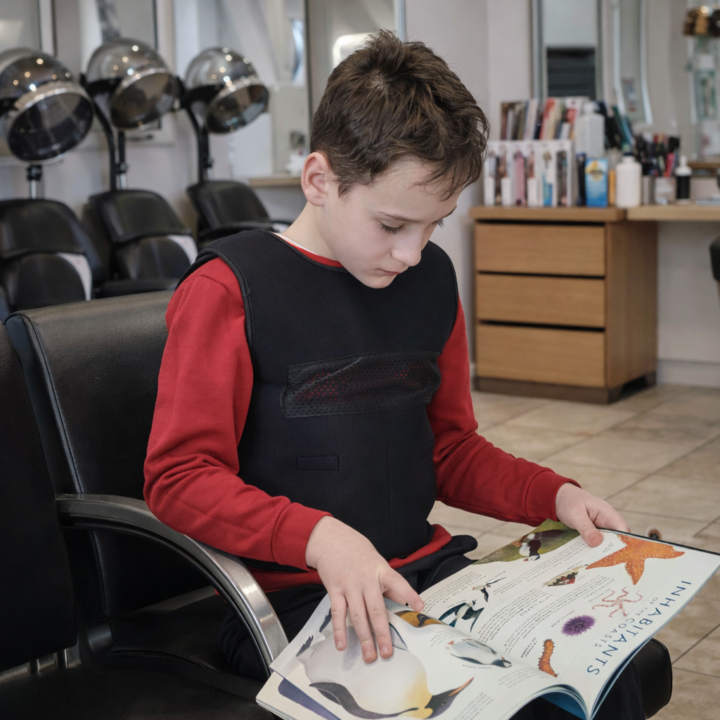
Haircuts can hit multiple sensory sensitivities at once. Identifying triggers in advance makes a big difference.
Common triggers and possible solutions:
Haircuts can feel like something being “done to” a child. Offering small choices restores a sense of control.
For example:
“Scissors or clippers?”
“A little cut or a big cut?”
“Sit on the chair or on my lap?”
“Do you want a short break?”
Even limited choices can make a big difference.
The haircut doesn’t have to happen all at once.
It’s perfectly okay to:
Cut only part of the hair.
Take breaks.
Stop and try again another day.
Prioritise function over style.
For some children — particularly those with higher support needs — gradual desensitisation over several weeks works far better than pushing for completion in one visit.
Abstract phrases like “almost done” can increase anxiety.
Instead, try:
“Five more snips.”
“Two more minutes.”
Counting down together.
Using a visual timer to show how much time remains. Such as our Sand Timers and Visual Count Down Timers.
Clear, predictable endings help children tolerate discomfort.
Plan something positive afterwards.
This might be:
A favourite snack.
A visit to the park.
Extra screen time.
Make sure your child knows what they’re working toward. Clear expectations increase cooperation.
If your child arrives dysregulated, the haircut is likely to be much harder.
Before the appointment:
Ensure they’ve eaten and had a drink (if that helps them regulate).
Avoid scheduling during known difficult times (for example, straight after school if that’s challenging).
Build in calming sensory input beforehand (deep pressure (such as our deep pressure garments), quiet time, movement).
A regulated child copes better with sensory demands.
A successful haircut looks different for every child.
Success might mean:
Sitting in the chair 30 seconds longer than last time.
Allowing clippers near their head.
Getting half the haircut done.
Avoiding a meltdown. (See our full range of Meltdown Control Resources)
Progress counts — even when it feels slow.
For many autistic children, haircuts aren’t just inconvenient — they’re neurologically overwhelming. Approaching the experience with empathy, preparation, and flexibility can transform it from a battle into something manageable.
If you’re struggling right now, know that you’re not alone. With patience, consistency, and the right supports, things really can improve over time.